
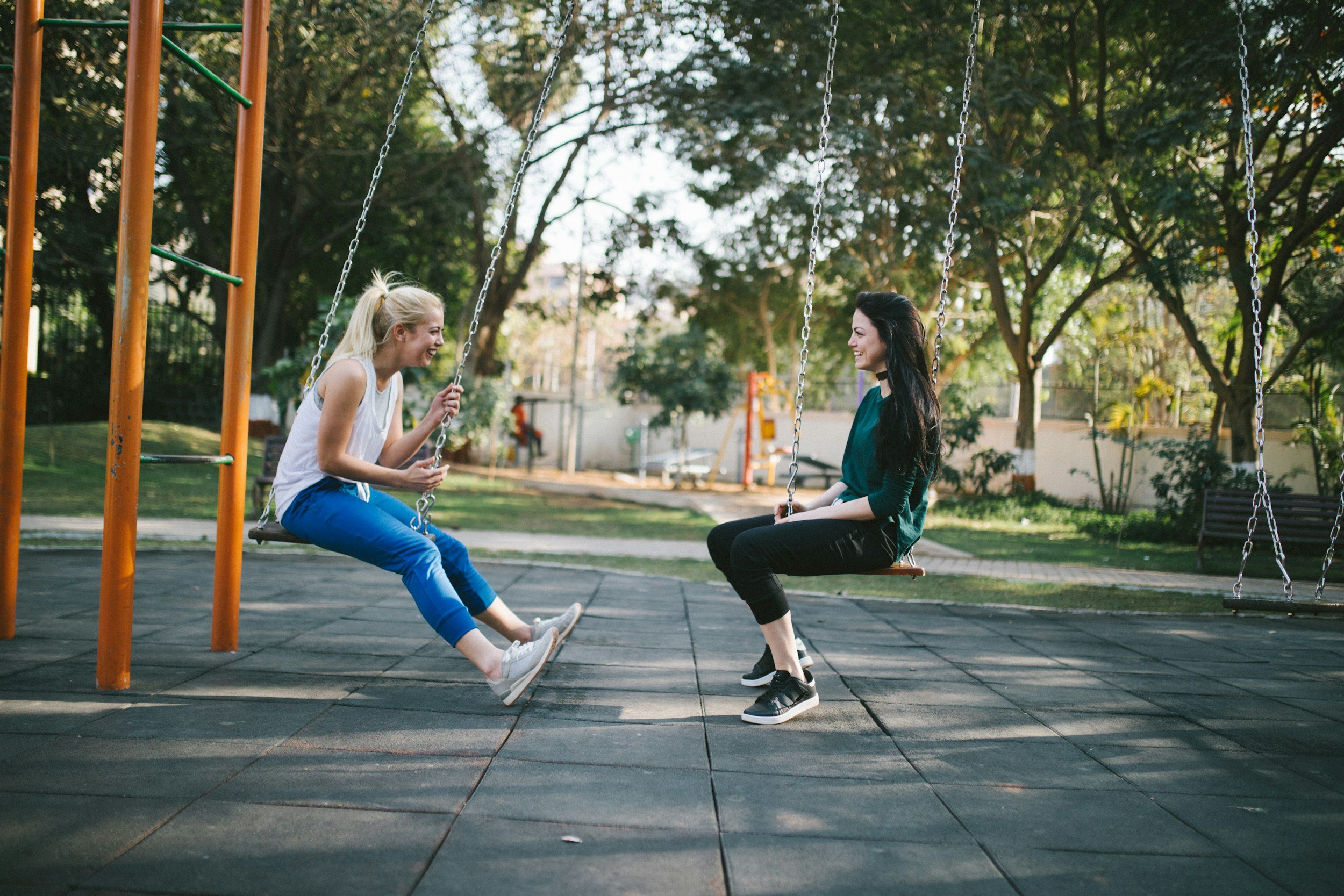
I met up with a good friend recently. We’ve known each other since university, where we shared rooms, so we have a lot of common ground - including the obligatory shared embarrassing memories! Our youthful misdemeanours have given us a special bond, although I sometimes wonder how on earth our landlord put up with us.
Such a long-standing bond means we create time for each other every six months or so, depending on what life may throw at us. Within a few minutes of meeting we’ll have picked up where we last left off. There’s a natural ebb and flow between us, and we don’t encroach on each other’s physical or emotional space. Our conversations usually begin with catching up with news of family members, and as we’ve known each other so long this naturally includes the older generations. Then we might progress to enquiring about each other’s work and social life.
There’s an acceptance that comes with understanding that these conversations are set in a ‘safe space’. We are supportive and forgiving to ourselves and each other, yet also able to gently voice challenges to any perceived misinterpretations. Sometimes the conversation can become less easy when difficult or searching questions are asked, but because we trust each other we understand that this probing may help to shed new light, offer a different perspective or create a fresh possibility. We have each other’s backs. It seems to me that we can do this because we’re emotionally close, even if we live some distance apart.
The therapist Lara Hammock uses a visual model to help understand personal space and relationship interaction. She uses an image of two rooms, a door and a colour-coded glow. I’ve found it really helpful in understanding how connection between two people can work, so this is my slightly adapted version.
Imagine your own room that represents yourself. This might include your ambitions, personality traits, desires, fears, values, experiences, and loves. Your room also represents your self-respect, so when you’re talking to someone there is a door between your room and theirs. The door represents the emotional connection that allows each of you to be seen and to see. When the door is open in a safe, trusting relationship, you take turns listening and speaking and staying present for each other. You both remain open, curious, and present, offering perspective without blame or retreat. If your rooms are visualised as blue and red, there is a purple glow of connection between you.
That glow of connection is what I experience when I meet up with my university friend. Our shared experiences have cemented a bond based on trust. However, it doesn’t always turn out that way. Relationships often require work and can be difficult to navigate. One of the consultants I regularly catch up with often bemoans his inability to listen, and frequently asks me how to do it!
In terms of this visualisation, keeping that metaphorical door open is difficult. There are three ways that we can inadvertently close it. Firstly, by a power struggle. If one person strives to ‘win’ by trying to coerce the other into their own room by lecturing, threatening, convincing, fixing or assuming they are ‘right’, this leaves no space for the other person’s opinion or point of view. Secondly, by surrendering. If one of you abandons your room entirely to comply with the other, this can result in the surrendering party resentfully complying to keep the peace. This is likely to lead to a quiet collapse of their authenticity. Thirdly, by ghosting. One person shuts their door, withdrawing from conversation. Unilateral decisions are made, stalling and fracturing connection. Often this can be seen as passive-aggressive behaviour.
If you recognise a relationship that you have in one of these three examples, it may help to ask yourself what you could do to open the door. How might you benefit if it remained open and the weight of disconnect was lifted?