
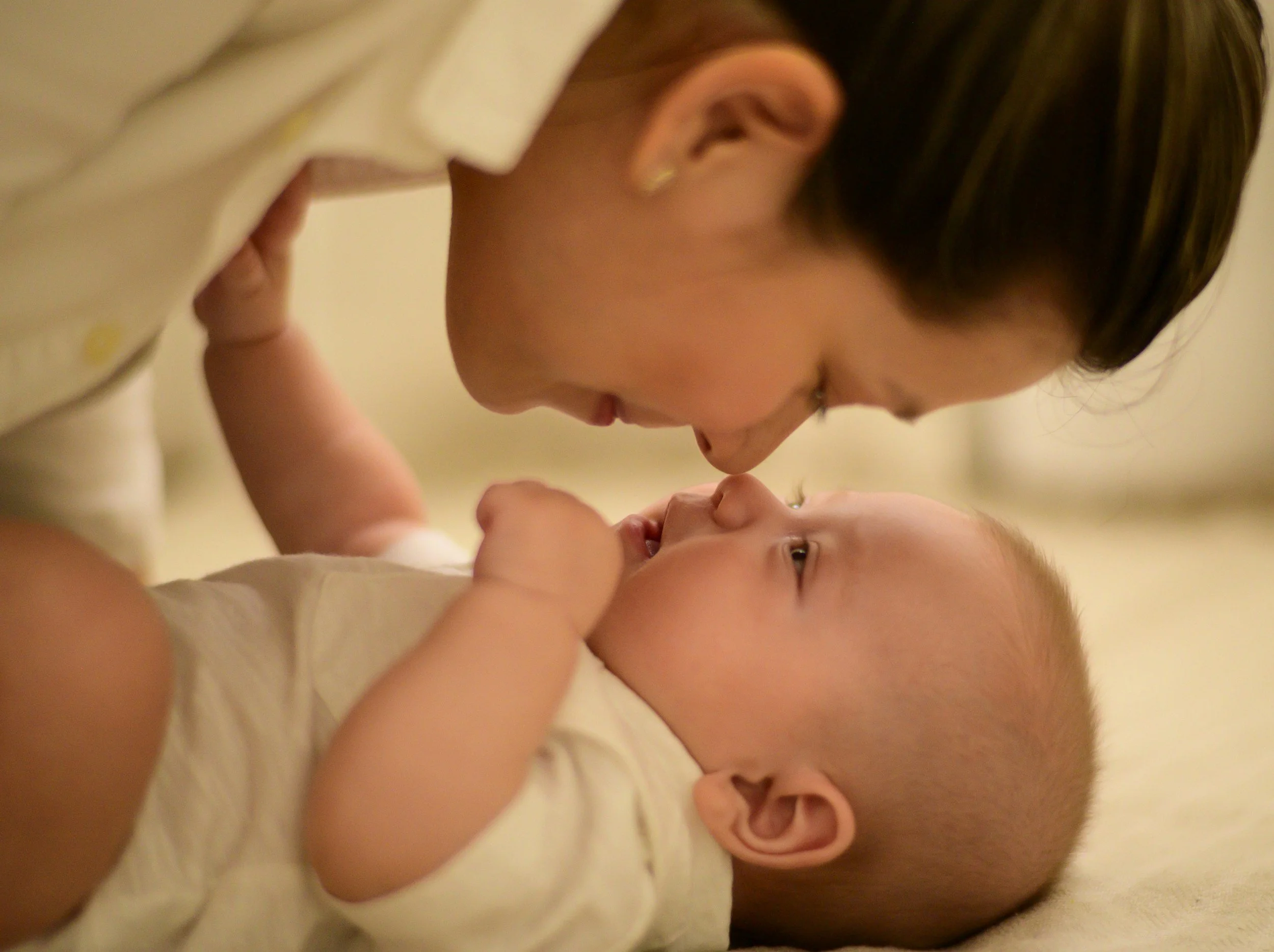
Decades of attachment research from Bowlby to Beebe to Gabor Maté tells us about the bond that has the potential to shape how we cope in later life.
You probably didn't need a researcher to tell you that the relationship between a parent and a new-born is important there’s something special about it. But what is it? science has spent the last seventy years trying to understand exactly what the relevance of that bond is. As my work with many of the people who recover from neuroplastic symptoms shows the answers turn out to matter far more than expected.
Bowlby got there first
British psychiatrist John Bowlby is associated with attachment theory. Working in the mid-twentieth century, he made a then-radical claim: a child's need for a close, consistent relationship with a caregiver isn't a nice-to-have. It's a biological necessity, as fundamental as food or warmth.
Bowlby's idea was that we're all born with an attachment system hardwired in. When a baby feels scared or overwhelmed, that system switches on: the crying, the reaching, the desperate clinging; to pull the caregiver close. When the caregiver reliably shows up with warmth, something quietly significant happens. The child starts to build an internal working model of the world: people can be trusted, I am safe, and I am worth caring for. That template, laid down in the earliest months, tends to travel with us for life.
What's happening in those first face-to-face moments
Dr Beatrice Beebe, a psychologist and researcher at Columbia University, has taken Bowlby's framework and explored it in depth. Using split-screen video to film mothers and four-month-old infants together, her work reveals a level of complexity in early interaction that most of us would never suspect.
Even the youngest babies are not passive recipients of care. They are active participants in co-creating the relationship that will shape them.
In fractions of a second, mother and infant are adjusting their expressions, sounds, and movements in response to each other a kind of improvised dance neither one is consciously choreographing. Beebe's research shows that how sensitively a mother follows her baby's lead at this stage predicts attachment quality months later. Not perfectly, life is messier than that, but meaningfully. And crucially, it's not one-sided: the baby is shaping the interaction too. There is a link to her work at the end of this piece.
When attachment costs us ourselves
Canadian physician Gabor Maté brings something a little more unsettling to the table. He points to what he sees as a central tension in growing up: the conflict between attachment and authenticity.
Every child needs to stay close to their caregivers. But every child also has real feelings, real needs, a real self. When those two things come into conflict, when expressing how you actually feel risks upsetting the adult you depend on, most children will quietly shelve their authenticity to protect the relationship. It's not a conscious choice. It's survival. But Maté argues that this early self-abandonment has a long tail: anxiety, depression, chronic illness, a persistent sense of not quite knowing who you are. It’s not safe to speak up. Not blame, he's careful about that, but a pattern worth recognising.
Why it matters for the rest of your life
The evidence linking early attachment to long-term health is now hard to ignore. The landmark ACE (Adverse Childhood Experiences) studies found a striking relationship between disrupted early nurturing and later rates of heart disease, autoimmune conditions, mental illness, and addiction. Securely attached children, by contrast, tend to grow into adults who regulate their emotions more easily, handle stress better, and build more satisfying relationships. Their bodies, quite literally, bear the difference.
And none of this is a life sentence. The brain stays plastic. Good therapy, loving relationships, and genuine self-awareness all have real reparative power. But the early years are a particularly sensitive time and can shape adult behaviour and emotional responses.
The best news: good enough really is enough
What is genuinely reassuring is that perfect attunement generally isn't possible and it isn't what children need. What matters is not that you never get it wrong, but that you repair when you do. The rupture-and-reconnect cycle, researchers now believe, is actually part of how children learn that disconnection isn't permanent and relationships can be trusted. I have shared the ‘Still Face’ experiment with some of you that demonstrates this.
So the next time you see a baby catch your eye across the room, or a toddler bolts toward you after a tumble, know that something real and lasting is being built. Not just a sweet moment. It’s a foundation.
References: Bowlby, J. (1969). Attachment and Loss, Vol. 1. | Beebe, B. et al. (2010, 2016). Mother–Infant Research, Columbia University. | Maté, G. (2019). When the Body Says No. | Felitti, V.J. et al. (1998). ACE Study, American Journal of Preventive Medicine.